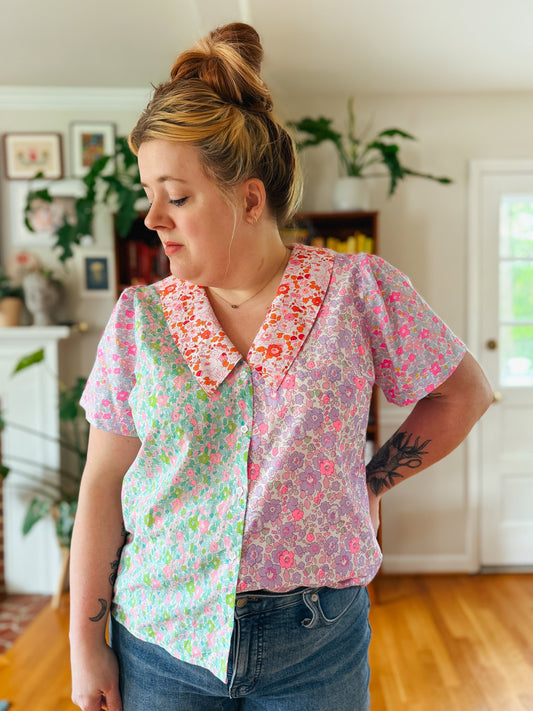
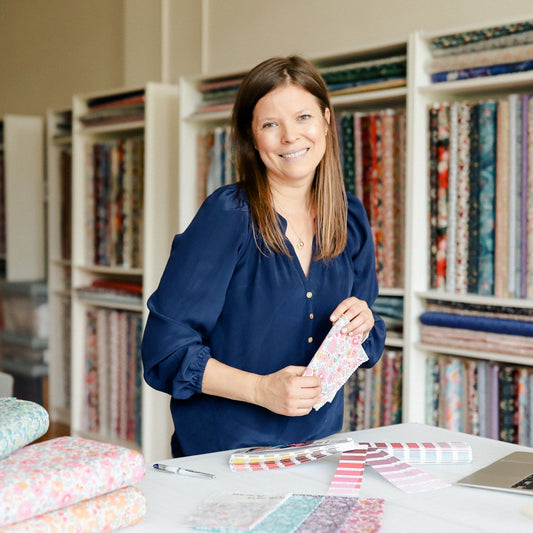
It is time for a second installment of our new project-spotlight feature: Sew and Tell!
In our Sew and Tell segments, we are highlighting fun and inspiring makes and learning a snippet or two about the process.
We are excited to feature Jen Sorenson's Prospect Flower quilted jacket! Our team met Jen at QuiltCon this year and we were immediately struck by her gorgeous jacket, pictured above. We loved her use of Tana Lawn® in a quilt coat and we were inspired by the way the quilting transformed a print that we knew well.
Jen, Bernina Ambassador and longtime quilter, has generously shared insights from her process and advice for any aspiring quilted coat makers. She has also shared these fabulous photos of her rocking her quilt coat in front of the Liberty store on her recent trip to London. You can see more of her work (and be inspired by the many marathons she has conquered) on her instagram here: @aquiltingjewel
Fabric: Prospect Flower (A)
Pattern: Jen reports that she would opt for a different pattern next time. Luckily there are many other fantastic quilt coat and jacket patterns out there! These are a few that other stitchers have enjoyed.
Rue Quilt Coat by Spaghetti Western
Quilted Jacket Beginner Sewing Pattern by Rosys Patterns
Flora Jacket by Brightside Patterns
Do you know a quilted jacket or coat pattern that you would recommend? Share it in the comments!
DuckaDilly: Tell us about your process! How did you prepare your quilted Tana Lawn®? (what batting did you use, what did you use on the reverse side etc.)

DD: What tips do you have for longarming Tana Lawn® to turn it into a quilt coat?
Jen: When thinking about longarming Tana Lawn for a quilt coat, I think it's important to really consider the scale of the design you're quilting and the impact that has on the finished product. Because you're going to cut up the quilted fabric, you also want to use more stitches per inch than you might otherwise use for a basic quilt. I recommend at least 10 stitches per inch, if not 11 or 12. I also recommend a polyester thread and around a 40wt to be visible enough to be seen and have a bit of a sheen. Also because I was using a polyester backing. And yes, you can blend cottons and polyesters. ;-)

DD: We love your use of bold solids paired with floral prints! What tips do you have for choosing color combinations?
Jen: Thank you! This really was a result of using the longarm as a forcing function to add another color. I needed another fabric for the backing and in order to make the entire garment cohesive, I quilted the entire piece of fabric, front and back, at the same time. If I really wanted to, I could have made this piece reversible since I quilted the plum and Liberty fabric together in one solid 3 yard piece. That also means there's a lot of Liberty that you don't see, but I was okay with that since it's so soft against my body.
DD: Do you think you will make this again? If so, would you do anything differently next time?
Jen: I definitely want to make more quilt coats using quilted Liberty. I like doing different things, so I'll likely try another style, maybe experiment with some different fabrics and patterns to see how I can continue to evolve this technique and end product. I'll play with different quilting designs. Maybe I'll use a couple of different coordinating solids. Maybe I'll patchwork some different Liberty prints before quilting them up...

DD: Is there anything else you'd like to share about this project?
Jen: I think sometimes we're so hesitant to cut up or use our precious Liberty fabric that it can be intimidating to tackle a project like this at first. Hence my testers in the beginning. I wanted to work out some kinks and I did just that. But I have zero regrets quilting up and then cutting apart some precious Liberty fabric to make this one of a kind quilt coat. And like I mentioned before, worst case scenario you have some quilted fabric to make some tote bags, toiletry bags, laptop sleeves, etc. Just go for it.
Inspired to make your own quilted jacket? We are too!
Dreaming of Quilt Coats
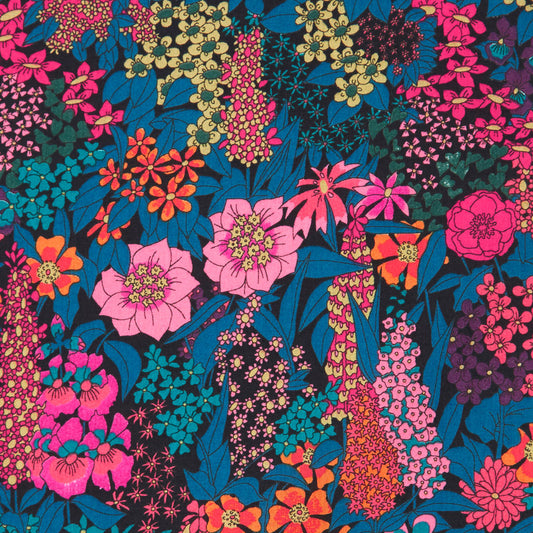

Edna Berry (V)

Dreams of Summer (B)
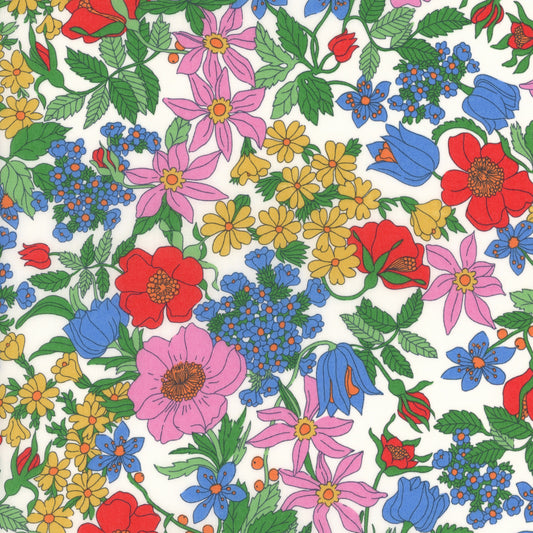
Clarabell (A)

Elodie Bea (A)


Mauvey (C)
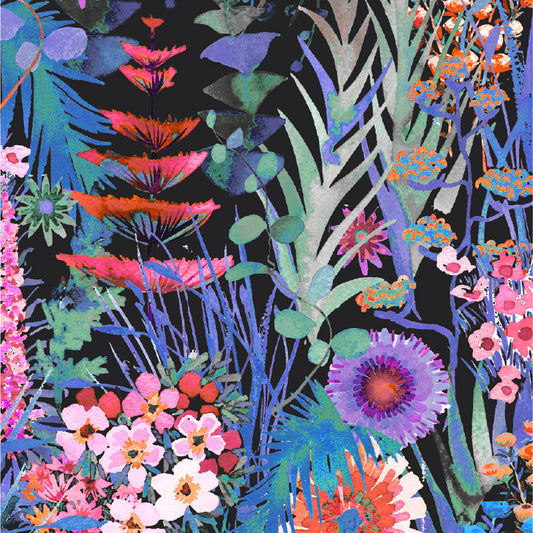
Tresco (E)


Thanks for taking the time to share your make, Jen! We know our studio is certainly a buzz with quilted jacket inspiration!
xo, DuckaDilly